Lumya
A safety system for deaf cyclists. A rear sensor unit, a handlebar
light display and haptic wristbands: vehicle type becomes an icon,
distance becomes colour, approach becomes moving light.
1 / What it had to do
Deaf and hard-of-hearing cyclists lose the most useful safety
channel in traffic: the sound of something arriving from behind.
Mirrors only work when you look at them, and looking
at them is exactly what you cannot afford to do in the second
that matters. The system had to put what is behind you
into a channel that works at the edge of vision, with nothing
to read and nothing to interpret.
2 / The idea
Turn the road behind into a language rather than a warning.
Three variables, three codes: vehicle type becomes an icon,
distance becomes colour, and approach becomes movement –
the faster something closes, the faster the light travels. A rider
learns it in about a minute and then stops noticing they are
reading it, which is the point.
3 / How it works
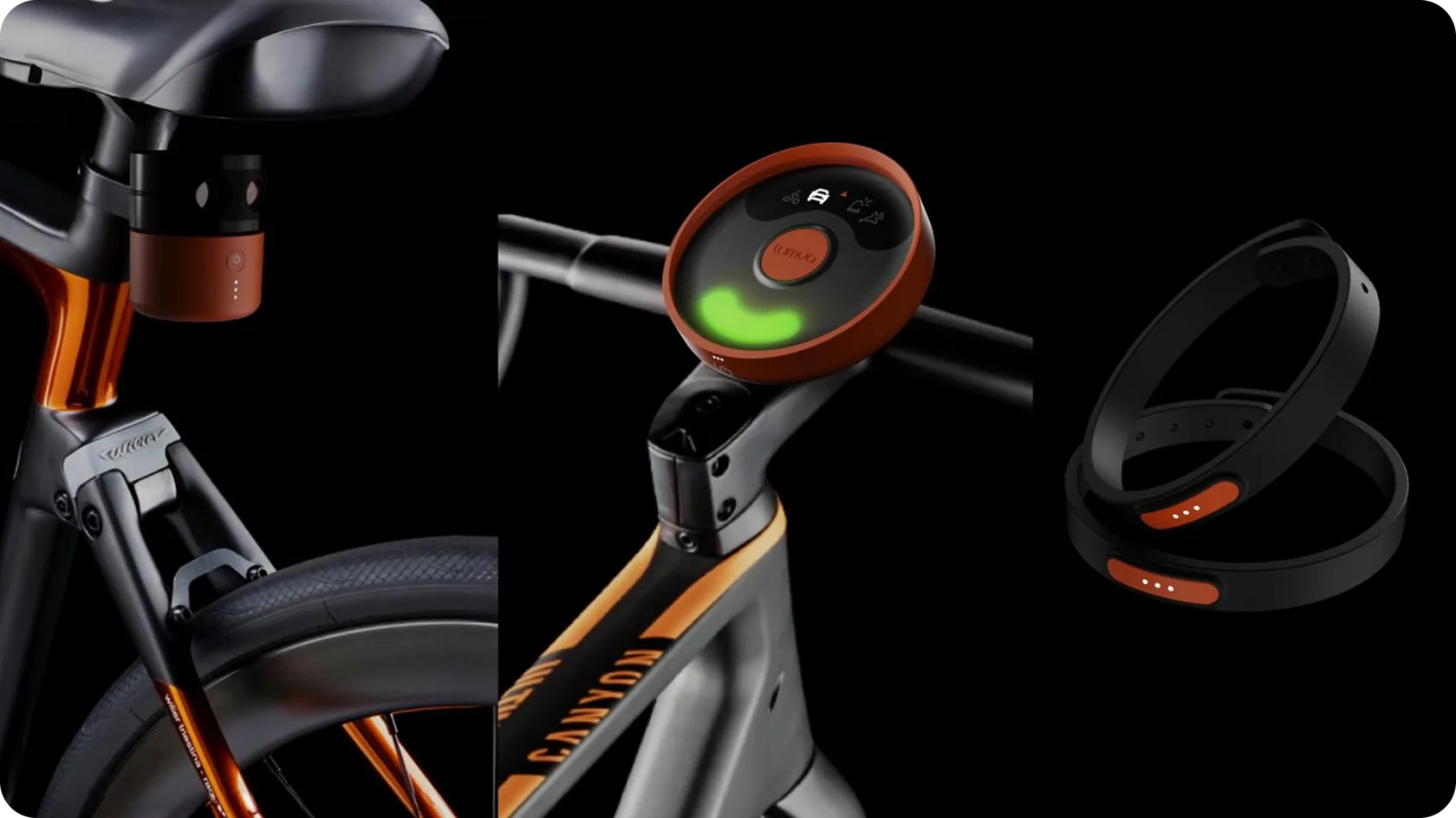
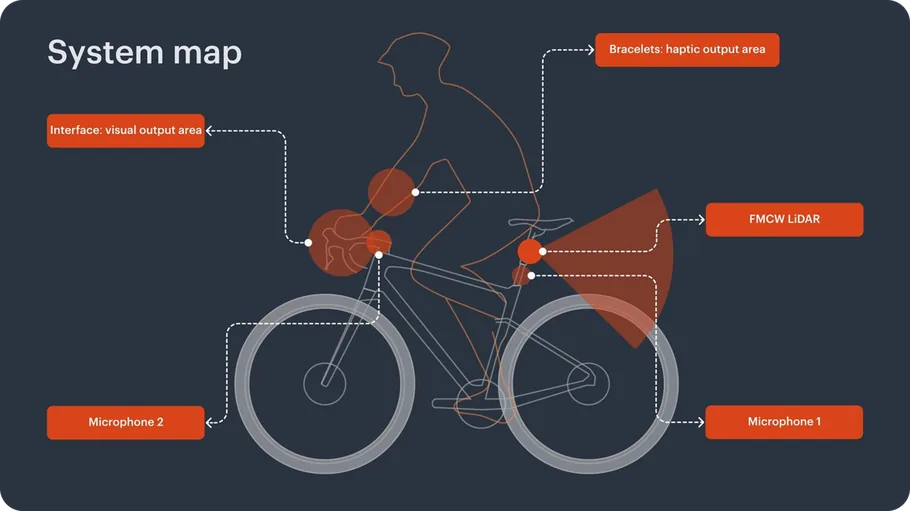
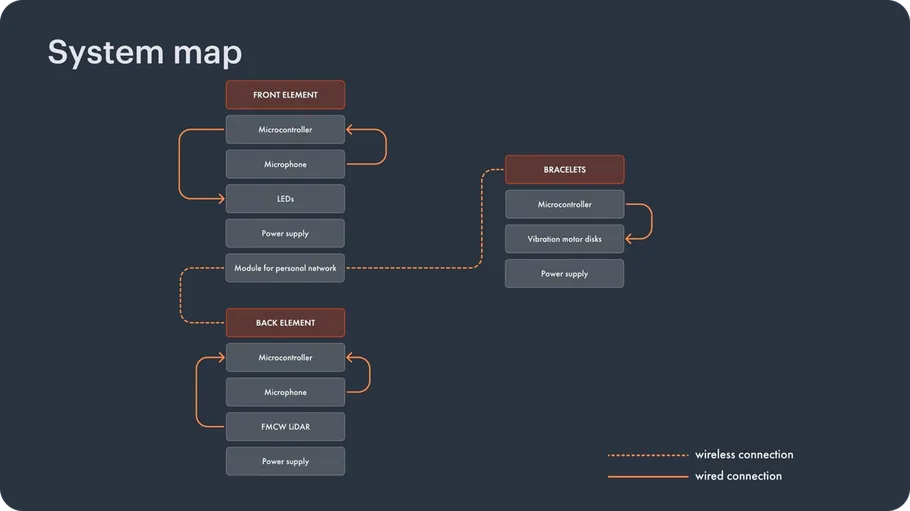
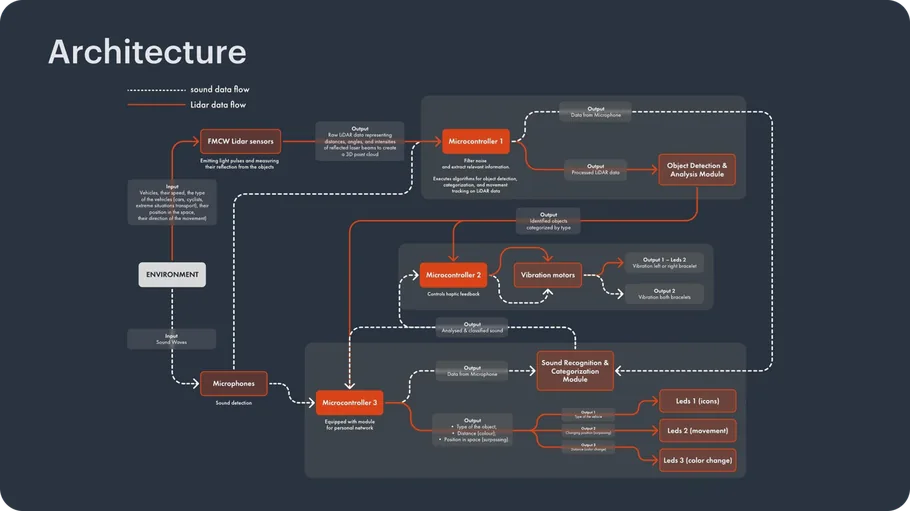
A rear-mounted ultrasonic sensor feeds an Arduino, which
classifies what it is seeing and drives two outputs at once:
a Neopixel strip mounted along the handlebars, and haptic
wristbands that carry the same signal to whichever side
the vehicle is on. The light display sits inside peripheral vision
when the rider is looking at the road, so the information arrives
without a glance being spent on it. It was built as a working rig
and ridden, not rendered.
- Research + system mapping
- Ultrasonic sensor
- Arduino
- Classify: type / distance / approach
- Neopixel bar
- Haptic wristbands
4 / Prototype &
the immersive test
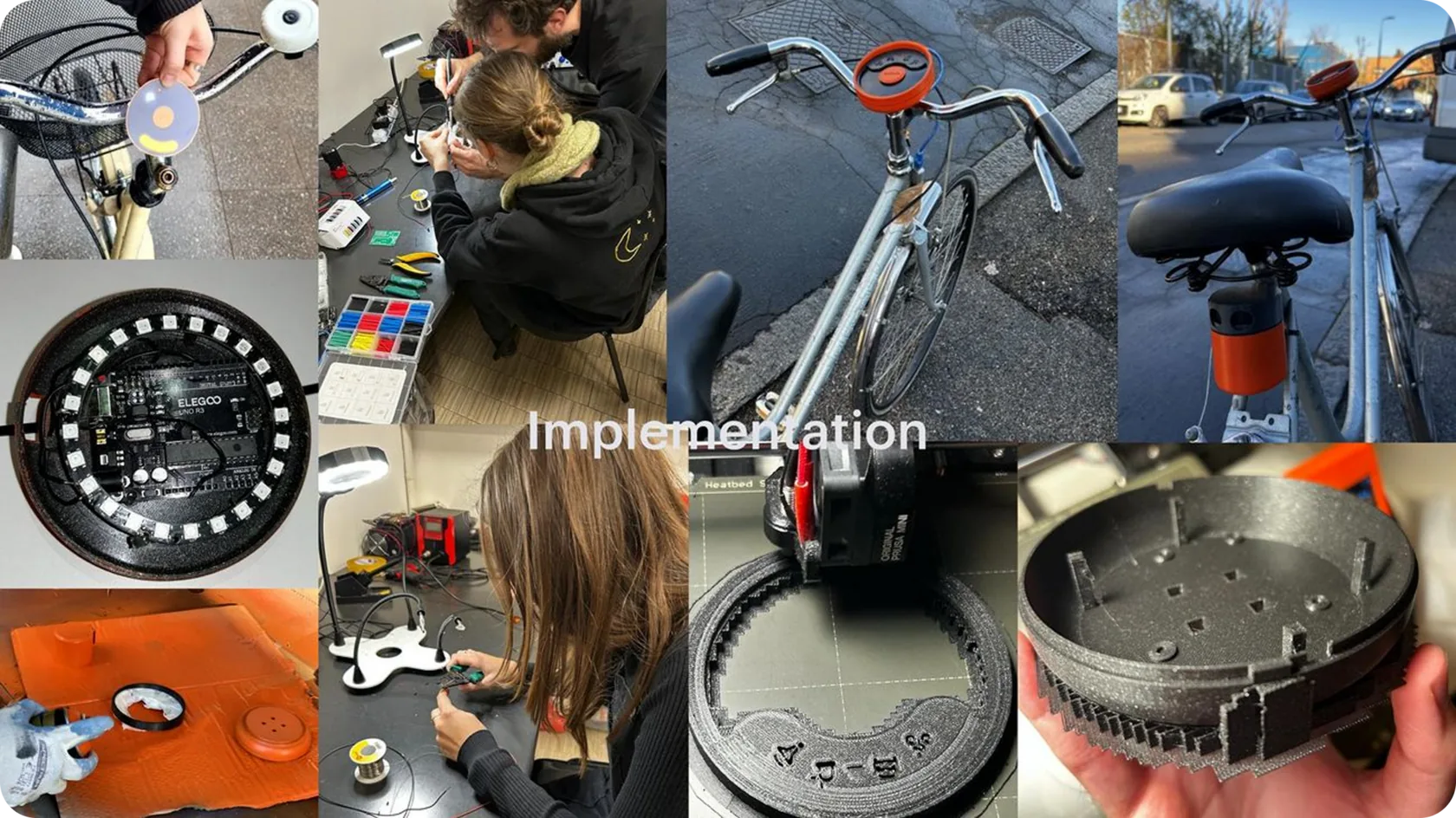
We built a working MVP to test the experience,
not the engineering: an Arduino-driven rig with an ultrasonic sensor, a Neopixel ring for the light language, vibration discs
in the bracelets, and a ProtoPie interface. The LiDAR architecture above is the proposed production direction.
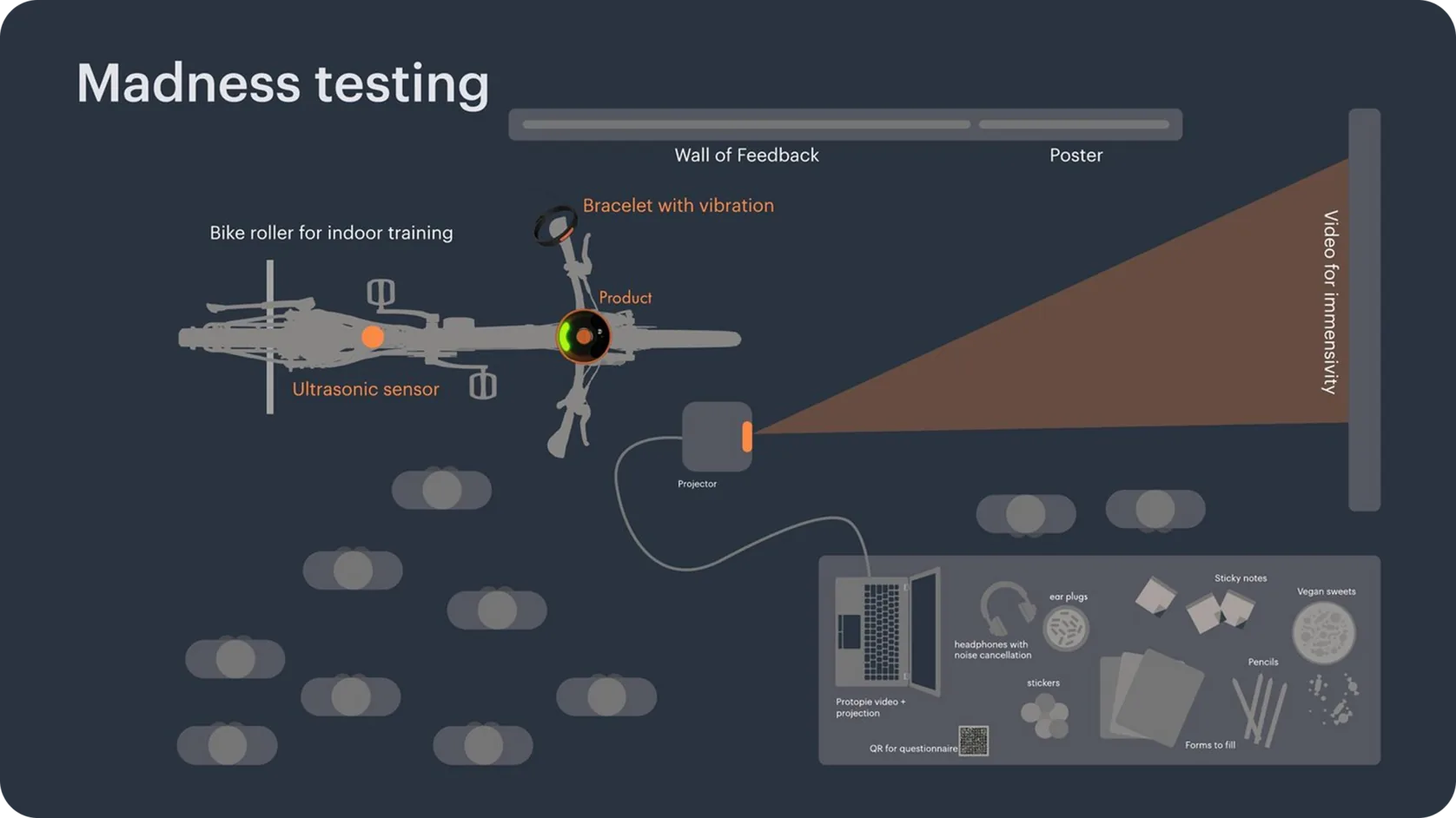
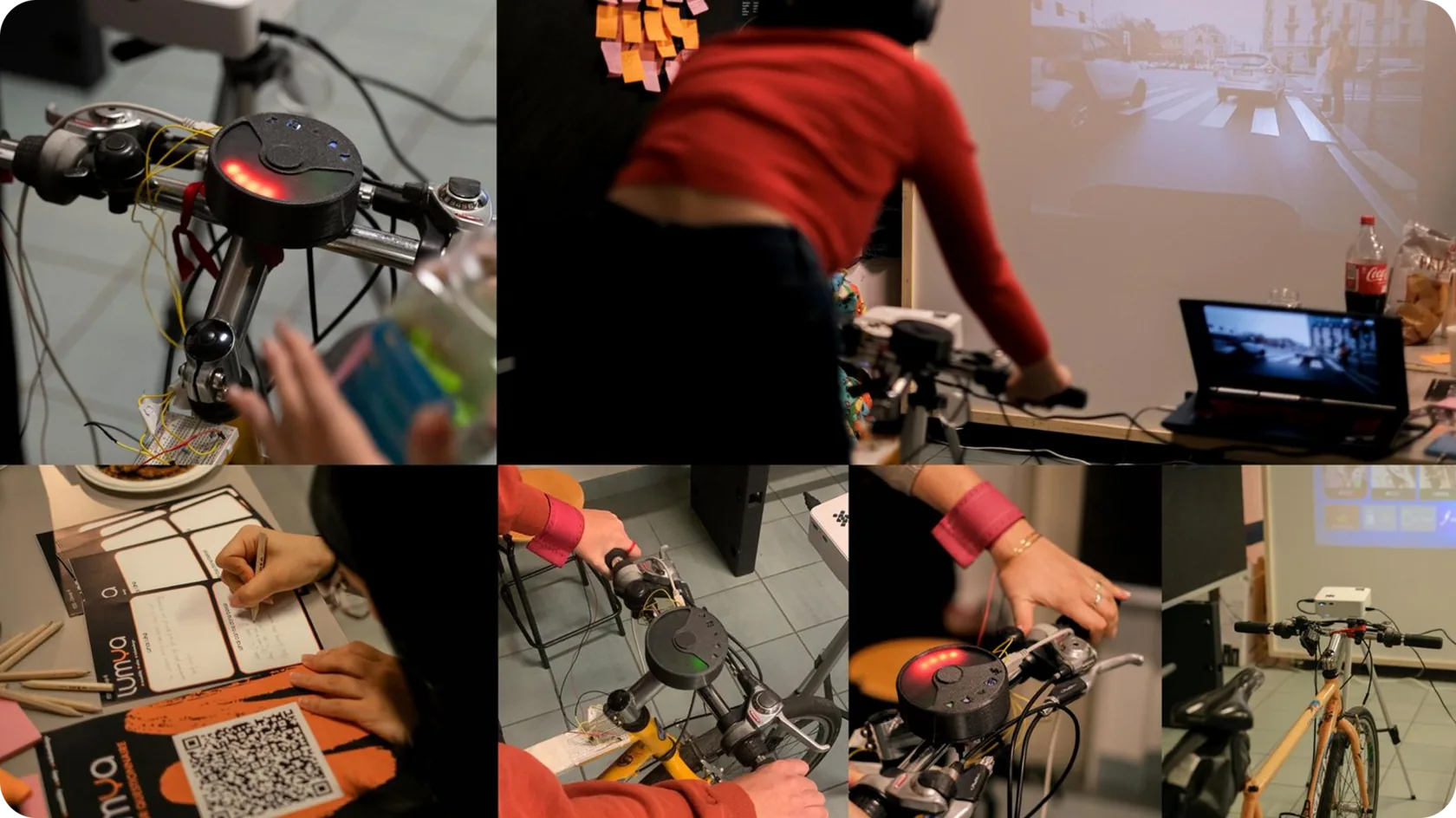
To test it honestly, we (it was a group project) recreated deafness. A rider sat on a bike roller facing a projected POV
video of city cycling, wearing earplugs and noise-cancelling headphones, while the prototype drove the light and haptics
in sync with the footage. Visitors rode it, then left feedback on a wall and a questionnaire.
5 / What testing
changed
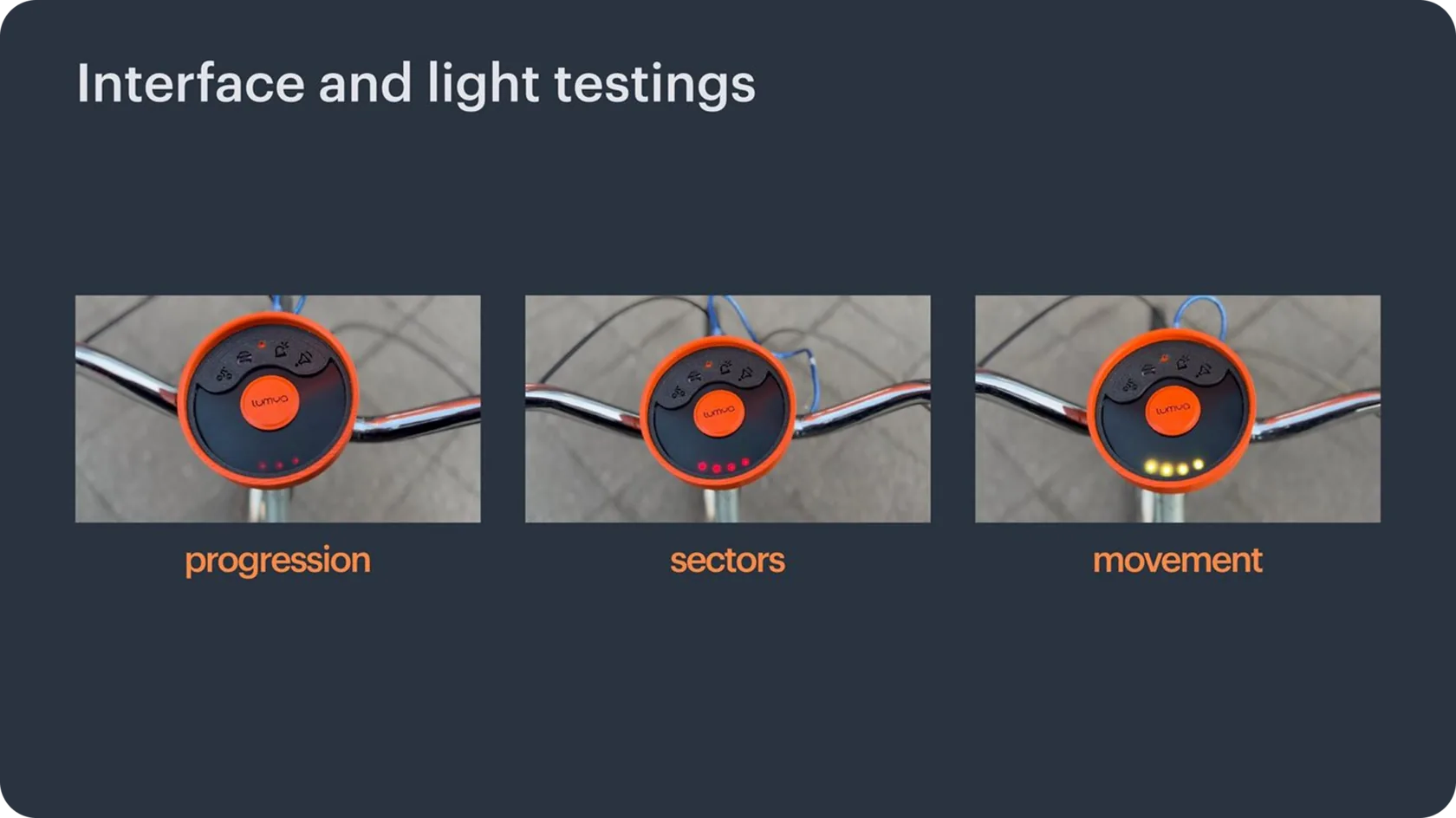
Testing changed the design. People reacted to the light colour and the way it moved, to the vibration, to where the display sat and how visible it was, and to the bracelets. Four changes came out of that. The light became segments that fill up,
so an approaching vehicle reads as motion instead of a static dot. Vibration now only fires when something is overtaking, and it comes with the light rather than on its own. The display got an edge and a tilt toward the rider's eyeline. The icons got bigger, so the meaning lands in a glance instead of a read.